5 Signs Your Vehicle Needs a Tow Instead of a Jump Start
A dead car battery is the most common reason Ottawa drivers call for help, and most of the time a jump start solves it in minutes. But not every no-start situation is a battery problem. Attempting repeated jump starts on a car that actually needs a tow wastes time and can cause damage. SMC Towing Group handles battery boost calls in Ottawa every day. The team knows the difference between a car that needs five minutes of jumper cables and one that needs a flatbed. These are the five signs that mean it is time to stop trying to start the car and call for a tow instead.
Sign 1: No Response at All After a Jump Start Attempt
A jump start is designed to solve one specific problem: a battery with a genuine charge deficit. Connect the cables correctly, wait a couple of minutes, and a battery that is simply drained should turn the engine over. If nothing happens after a properly connected jump attempt, the issue is very likely not the battery at all.
This distinction matters because a second or third jump attempt on a car that already failed to respond rarely produces a different result. If the first attempt was connected correctly and gave no response, the underlying problem is elsewhere. It could be a failed starter motor, a bad ignition switch, or a battery so deeply discharged or damaged that jumper cables cannot recover it. Repeating the same attempt multiple times in cold weather also risks damaging the donor vehicle’s electrical system.
For a full breakdown of what causes a no-start beyond the battery, the why won’t my car start guide covers all seven causes Ottawa drivers encounter. If a jump attempt produces absolutely no response, that guide is the next step before calling for a tow. It helps narrow down what the technician should expect to find.
Sign 2: Grinding, Clicking, or Unusual Noise During the Attempt
The sound a car makes during a jump-start attempt is one of the clearest diagnostic signals available without any tools. A healthy jump attempt on a genuinely dead battery produces one of two outcomes. Either silence followed by a normal engine start, or a brief period of slow cranking that strengthens as charge transfers.
A single loud click with no cranking at all points to the starter motor, not the battery. A grinding or grating noise when the key is turned suggests the starter motor’s gear is failing to properly engage with the engine’s flywheel. This is a mechanical problem a jump start cannot fix, regardless of how much charge is available. Rapid repeated clicking that does not improve even after a full jump attempt suggests a deeper problem. It could be a loose connection at the battery terminals or internal battery failure.
None of these sounds should prompt a second or third jump attempt. They are mechanical or electrical symptoms that a boost does not address. Continuing to crank the engine repeatedly can cause additional damage to the starter motor or flywheel teeth.
Sign 3: The Car Starts Then Dies Again Within Minutes
This is one of the most misleading situations a driver can face, because the jump start appears to have worked. The engine turns over, runs, and the driver pulls away believing the problem is solved. Then, within a few minutes to a few kilometres, the car stalls again and will not restart.
This pattern is the signature of a failing alternator rather than a dead battery. The alternator’s job is to recharge the battery and power the vehicle’s electrical systems once the engine is running. If the alternator has failed or is failing, the battery receives no further charge after the jump start. It simply runs down again on whatever reserve it has left, often within minutes. A second jump start in this scenario produces the same short-lived result, because the underlying cause has not changed.
Driving on a failing alternator is not just inconvenient. It risks a stall in traffic, on a highway on-ramp, or in an intersection, which is a genuine safety hazard. SMC Towing Group dispatches technicians who can confirm an alternator problem on site before the vehicle goes anywhere further. If a jump start gets the car running but it dies again shortly after, the right move is to call for a tow. Attempting another boost rarely helps. Mobile battery testing Ottawa technicians can confirm on the spot whether the alternator is charging correctly. That settles the question before the vehicle is moved anywhere.
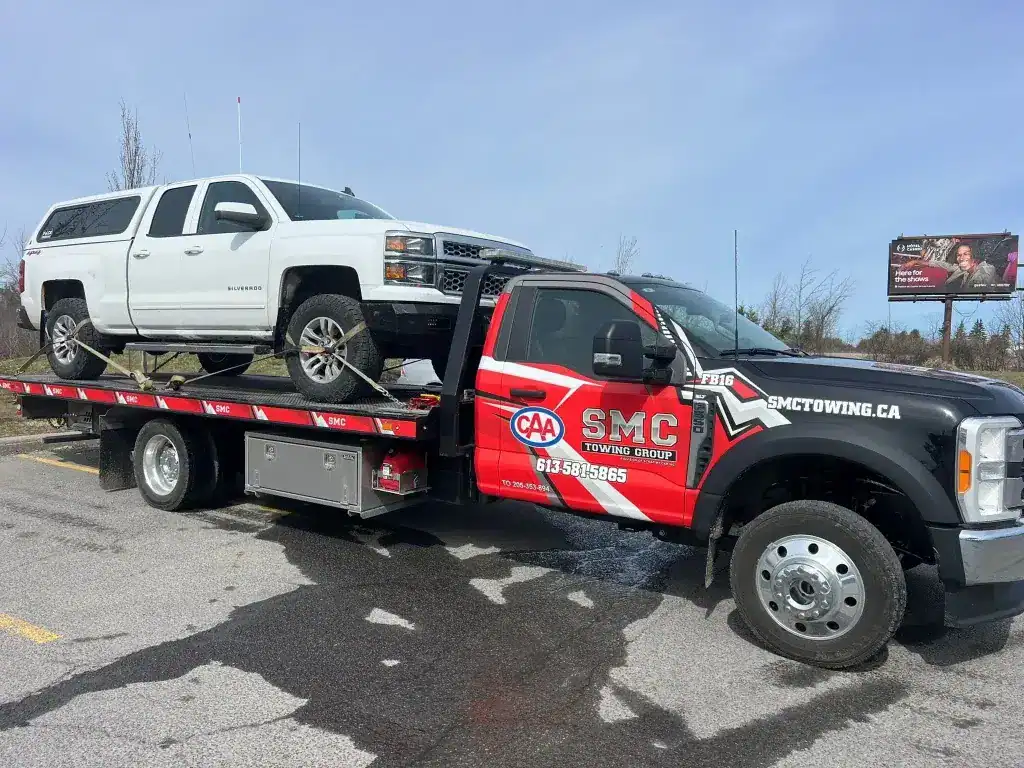
Not sure if your car needs a boost or a tow? SMC Towing Group dispatches technicians across Ottawa 24 hours a day who can assess the situation on site. Call (613) 801-2476 or visit the contact page for immediate help, whether that turns out to be a quick jump start or a tow to the nearest shop.
Sign 4: Visible Battery Damage
Before attempting a jump start at all, a quick visual check of the battery itself can prevent a dangerous situation. Certain conditions mean the battery should not be jump-started under any circumstances, regardless of how confident the driver feels with jumper cables.
A battery that is visibly cracked, swollen, or bulging has likely suffered internal damage that makes it unstable under load. A battery leaking fluid, whether a clear liquid or a white crystalline residue around the terminals, indicates the case has failed. The battery may release corrosive or hazardous material during a jump attempt. A battery that is frozen solid should never be jump-started. This happens in Ottawa when a weak or completely discharged battery sits through a severe cold snap.
If there is a rotten-egg smell near the battery, that is hydrogen sulfide gas. It is a sign the battery is compromised and potentially dangerous to handle. Any of these conditions call for professional handling rather than a driveway jump start. SMC Towing Group technicians assess battery condition safely and arrange a tow when the battery cannot be handled at the roadside.
Sign 5: Smoke, Fluid Leaks, or a Burning Smell
Some no-start situations have nothing to do with the battery at all. Attempting a jump start in these cases can make a dangerous situation worse. Any smoke or visible steam from under the hood means the vehicle should not be started under any circumstances. This applies whether the smoke appears before, during, or after a jump attempt.
A strong burning smell, whether electrical or like burning rubber, points to a problem under significant stress. This could be the wiring, the electrical system, or a mechanical component. This applies regardless of how the smoke or smell first appeared. Visible fluid pooling under the vehicle, particularly if it appears alongside a no-start condition, suggests a leak significant enough to have affected engine operation. Starting the engine in this state can cause further damage. It can also create a fire hazard if the fluid is oil or fuel near a hot engine component.
In any of these situations, the correct response is to stay clear of the vehicle and call for a tow. Flatbed towing Ottawa is the right method for a vehicle in this condition. It transports the car without requiring the engine to run or the wheels to turn, protecting both the vehicle and anyone nearby.
Why Ottawa Winters Make This Decision Harder
Ottawa’s climate adds a layer of complexity to the tow-versus-jump decision that drivers in milder cities do not face. At minus 20 Celsius, a battery that is otherwise healthy can lose up to half its cranking power. Even a jump-start attempt on a fundamentally sound battery may need a longer connection time or a second attempt to succeed. This can make it harder to distinguish a simple cold-weather battery struggle from a genuine underlying fault.
Cold temperatures also make batteries more prone to the physical damage described above. A weak battery left in extreme cold for several days is significantly more likely to freeze than the same battery in a moderate climate. A frozen battery is never safe to jump-start. Extended cold soak periods, where a vehicle sits unused outdoors through a multi-day cold snap, increase this risk. A marginal battery is more likely to cross the line from weak to damaged.
Winter conditions make it more important, not less, to recognise these five signs before attempting repeated jump starts. That is the practical takeaway for Ottawa drivers. A battery that would recover with a single boost in October may show cracking or swelling by January. This happens when the battery was already near the end of its life. SMC Towing Group technicians see this pattern every winter across Ottawa and can assess a battery’s condition before a jump attempt is even made. The CAA Winter Car Care guide covers seasonal battery preparation and testing recommendations that reduce the odds of encountering these situations in the first place.
Conclusion
Most dead battery situations in Ottawa resolve with a straightforward jump start. There is no need to call for a tow every time a car fails to start on a cold morning. But the five signs covered here point to a situation where a jump start will not solve the problem and may make things worse. No response at all, unusual grinding or clicking sounds, and a car that dies again shortly after starting all qualify. So does visible battery damage, or any smoke, fluid leak, or burning smell. All mean it is time to stop trying and call for help. SMC Towing Group’s technicians are trained to make this call correctly on the first visit.
For more on when to call roadside help versus a full tow, the emergency towing vs roadside assistance guide covers that decision framework. Knowing these five signs before they happen means less time stuck at the roadside guessing and more time getting the right help the first time.
SMC Towing Group provides 24/7 towing and roadside assistance across Ottawa. Call (613) 801-2476 or reach the team through the contact page for immediate dispatch. Whether the situation calls for a battery boost, a diagnostic test, or a tow, help is on the way.
Frequently Asked Questions
1. How many times is it safe to try a jump start before calling a tow?
One properly connected attempt is usually enough to tell whether a jump start will work. If the car shows no response at all, or starts and dies again within a few minutes, a second or third attempt rarely helps. It can also risk damage to the donor vehicle’s electrical system or the starter motor. If the first attempt fails clearly, the better move is to call for a tow or a diagnostic technician. Repeating the same attempt hoping for a different result rarely helps.
2. Can a jump start damage my car if I do not actually need one?
Yes, in certain situations. Jump-starting a battery that is cracked, swollen, leaking, or frozen can cause the battery to rupture or release hazardous material. Repeatedly cranking a starter motor that is grinding or clicking rather than turning over can cause additional mechanical damage. If the underlying issue is an electrical fire risk, such as visible smoke or a burning smell, starting the vehicle at all can make things worse. This is true whether the attempt is a jump start or otherwise.
3. My car started after a jump but died again a few minutes later. What does that mean?
This pattern almost always points to a failing alternator rather than a battery problem. The alternator recharges the battery and powers the vehicle’s systems once the engine is running. If it has failed, the battery has no source of charge after the jump start. It drains again quickly, often within minutes or a few kilometres of driving. A second jump start will produce the same short-lived result. The right step is a diagnostic test to confirm the alternator, followed by a tow if the alternator needs replacement.
4. Is it dangerous to jump start a car in extreme cold?
It can be, depending on the battery’s condition. A battery that has been exposed to extreme cold for an extended period is more likely to be partially or fully frozen. Jump-starting a frozen battery risks cracking or rupturing the case. A healthy battery that is simply cold and weak can usually still be jump-started safely. It may just take a longer connection time to build enough charge. Checking for visible ice, cracking, or swelling before connecting cables is worth the extra thirty seconds in any Ottawa winter situation.
5. How do I know if it is the battery or the starter motor?
The sound made during the attempt is the clearest indicator. A dead or weak battery typically produces rapid clicking along with dim or fading dashboard lights, or complete silence if the battery is fully discharged. A failing starter motor typically produces a single loud click with no cranking at all. The dashboard lights and radio continue to work normally because the battery still has power. A grinding noise during the attempt also points to the starter rather than the battery. If the lights and radio are working fine but the engine will not crank, the starter is the more likely cause.
6. What should I do if I see smoke or smell burning after trying to jump-start my car?
Stop immediately and do not attempt to start the vehicle again. Move away from the car to a safe distance, particularly if there is any visible smoke. Do not attempt to open the hood if smoke is actively coming from underneath it, since introducing more oxygen can worsen a fire. Call for professional help right away rather than attempting any further troubleshooting. A vehicle showing these signs needs to be assessed by a professional before it is started again. In most cases, it will need to be towed rather than driven.
The post 5 Signs Your Vehicle Needs a Tow Instead of a Jump Start first appeared on SMC Towing Group.
via SMC Towing Group https://ift.tt/bd1u4E7


Comments
Post a Comment